
Why You Feel Overwhelmed All the Time as a Mum
Holding it All Together: Until One Day, It Surfaces


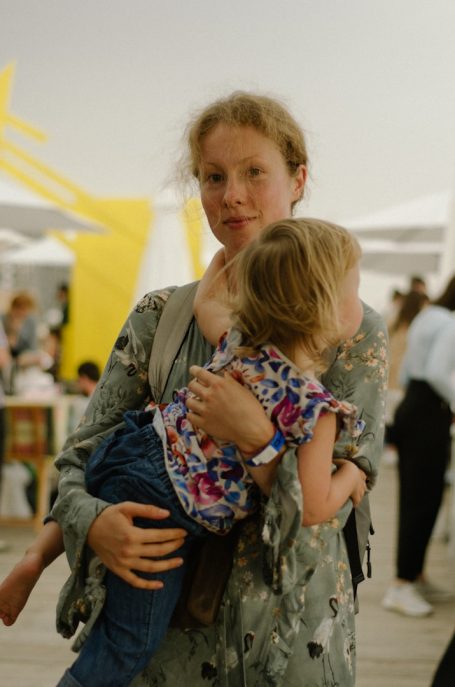
She doesn’t look like she’s struggling. She smiles politely, wearing the mask she’s learnt to live in.
Maybe you’ve seen her at the school gates. Or sitting in her car after drop-off, taking a moment before she drives away.
From the outside, she looks like she’s holding it all together, but underneath, she feels constantly overwhelmed. The kind that doesn’t go away with a good night’s sleep. The kind where her body feels wired, even when she’s exhausted.
She’s not the only one.
So many mums are quietly living like this, feeling on edge, unable to switch off, wondering why nothing they try really seems to help.
If you feel overwhelmed all the time as a mum and can’t switch off, this might be why. It’s often called mum burnout, but that doesn’t quite capture it because this isn’t just stress.
It’s a body that hasn’t been able to switch off for a long time.
She’s living on the edge of herself.
In survival mode.
And it feels constant.
Like a quiet noise in her body that never switches off.
A Day in Her Life...
Later that day, she gets a message: “How are you?”
She replies, “I’m fine.”
But something inside her knows she’s not. She keeps going. School pick-up. Dinner. Cleaning. Bedtime.
And then the house goes quiet. She sits down and her body gives in. Exhausted, she falls asleep on the sofa. Again.
But when she finally gets into bed, she’s wide awake. Her body is still running. Her jaw is tight. Her shoulders are tense.
Her mind races through everything she didn’t do, everything she needs to do, everything she feels guilty about.
And the thought comes in, louder now: Why can’t I just relax?
She’s tried:
The apps.
The affirmations.
The yoga when she can fit it in.
Even stopping to “just breathe.”
But none of it reaches this place inside her.
The part no one has explained to her
Her body doesn’t know the difference between:
- a crying child
- a never-ending to-do list
- emotional weight she’s carried for years
- and the pressure of holding everything together
To her nervous system, it feels like too much for too long. So her body adapts. It braces. It tightens. It stays switched on. And over time, that becomes her normal.
Not because she’s failing, but because her body is trying to protect her.
What this actually looks like
It shows up in ways she doesn’t always say out loud:
- Snapping over small things, followed by guilt
- Feeling touched-out, but also deeply lonely
- Being exhausted, but unable to switch off
- Holding her breath without realising
- A constant, low hum of anxiety
And still, she keeps going. Still shows up. Still tells herself: “It’s not that bad.”
The things she’s been told
Along the way, she’s heard all the right-sounding things:
“It gets easier as they get older.”
“You’ll miss this one day.”
“Just be grateful.”
“Other people have it worse.”
“Stay positive.”
And something in her tries to believe them, but instead of feeling supported, she feels smaller. Quieter. Like she should be coping better than she is.
So she tells herself: “I’m fine.” “I just need to be more organised.” “I should be able to handle this.” And keeps going.
Why nothing has really shifted
Because she’s trying to think her way out of something her body is holding. And the body doesn’t respond to pressure.
It responds to safety. Underneath it all, her system is still waiting for a moment to exhale.
What she actually needs
Not more pressure. Not more things to get right. But a different way of meeting herself. It begins simply.
Noticing her breath. Not forcing it. Not controlling it. Just gently connect to it. A soft, continuous rhythm.
And for a moment, something shifts. Not in her thoughts. In her body. A small softening. A little more space.
Like something inside her realises: maybe it’s safe enough to let go… even just a little.
A gentle place to start
If this feels familiar, she doesn’t need to overhaul her life.
She can begin here:
Sit with both feet on the floor.
Place one hand on her belly.
Breathe in gently through the nose.
And out through the mouth.
Let the breath flow continuously, like a soft wave.
After a minute, let the exhale lengthen slightly. Maybe add a quiet sigh. Maybe notice the feeling of her feet on the ground.
That’s enough. Not something to get right. Just a moment where her body is allowed to soften.
If you recognise yourself in her…
You’re not broken. You’re not failing. Your body has simply been holding more than it was ever meant to, for longer than it should have had to. And what you need isn’t more pressure. It’s space. Support.
And a way to gently release what’s been building underneath it all.
This is exactly why I created my workshop: “Holding It All Together.”
A space for the woman who looks fine on the outside, but knows something doesn’t feel right underneath it all.
A place where you don’t have to perform. Where your body finally gets to exhale. Where you’re guided, gently and safely, to begin releasing what you’ve been carrying.
If something in you is quietly saying “I need this”. You don’t have to keep holding it all together on your own. When women come together collectively, amazing things can happen.
You are invited to come along and let yourself be supported and held to release the emotional weight you've been carrying for so long.
Warmly,
Clare