Frequently Asked Questions
What is conscious connected breathwork (CCB)?
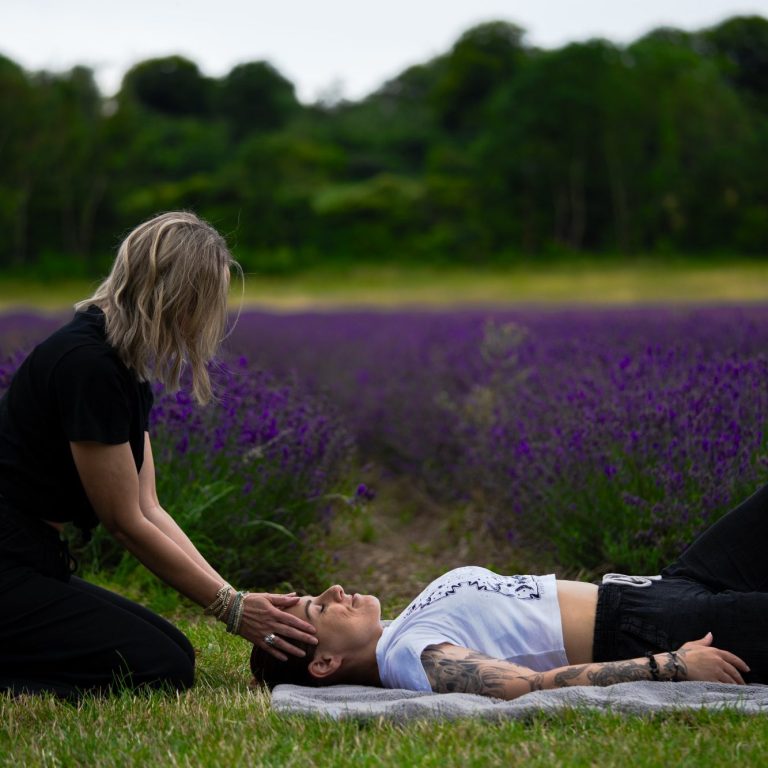
Conscious Connected Breathwork (CCB) is a guided breathing practice that uses the breath as a gentle, intentional way to support the nervous system and reconnect with the body.
In this practice, the inhale and exhale are softly connected, with no pause between them. The breath is conscious because you are aware of and guiding it, and connected because it flows continuously in a natural rhythm.
Over time, this style of breathing can help shift the nervous system out of habitual stress patterns and into greater awareness, regulation, and ease.
How It Works
When practised in a supported, trauma-informed way, conscious connected breathing may gently activate the sympathetic nervous system , the part of us responsible for mobilisation and response. This activation is not about pushing or forcing release. Instead, it creates an opportunity for the body to complete stress responses that were never fully processed.
Many people hold tension or emotional charge in their muscles, fascia, and nervous system. Breathwork offers a bottom-up, body-led approach, allowing these patterns to soften and release in their own time.
A Trauma-Informed Approach
In trauma-informed breathwork, everything happens gradually and with choice.
The breath is guided carefully, with frequent invitations to slow down, pause, or return to natural breathing. Activation is always balanced with grounding and regulation, so your system is supported before, during, and after the practice.
You are never pushed beyond your capacity. There is no “right” way to breathe, and no expectation to have a particular experience. The breath is adjusted moment by moment to support your nervous system, not override it.
What This Means for You
This approach creates space for:
- Deeper connection with your body
- Increased emotional awareness and regulation
- Release of held tension or stress
- A sense of safety and agency within the experience
Each session meets you where you are, honouring your pace, boundaries, and capacity.

Isn’t activating the sympathetic nervous system unsafe if I have trauma or anxiety?
Not inherently, context and pacing matter.
Trauma-informed breathwork recognises that healing does not happen only in calm states. The nervous system often needs to visit activation in a supported way in order to process and release what it has been holding.
The key difference is:
- Choice
- Gradual pacing
- Ongoing regulation
- Clear exits
You are guided to notice sensations early, respond to them, and come back to safety before overwhelm occurs.

Will I lose control or be made to relive traumatic experiences?
No. You remain conscious, aware, and in control throughout. This work does not involve reliving memories or forcing emotional release. Sometimes emotions arise; sometimes they don’t. Both are valid.
Trauma-informed facilitation focuses on tracking sensation rather than story. You are never required to analyse, share, or explain your experience.
Will I cry, shake, or have a big emotional release?
Some people do and some don't. It's not about a 'big' emotional release.
Releases can look subtle: a deep sigh, warmth, softening, clarity, or feeling more present. Dramatic expression is not a measure of success. Regulation and integration are prioritised over visible release.

Is this therapy or a replacement for counselling or medical care?
No. This is a wellbeing and self-regulation practice, not psychotherapy or medical treatment. It can complement therapy, counselling, or other forms of support, but it does not replace them.
If something arises that feels beyond the scope of this work, appropriate referrals are encouraged.

Who is this work suitable for?
This work is often helpful for people who:
- Feel stressed, overwhelmed, or stuck
- Have tried talking approaches and want something body-based
- Feel disconnected from their body
- Want to understand their nervous system more deeply
It’s especially suited to people who want gentle depth, not force or performance.
Are there people who should not do conscious connected breathwork?
Yes. Conscious Connected Breathwork may not be suitable, or may need adaptation, for people with certain medical or mental health conditions.
You will be asked to check the contraindications list, and you are always welcome to discuss concerns privately before participating.

How many sessions will I need?
There’s no fixed answer.
Some people notice benefits after one session; others prefer ongoing practice. Healing and regulation are non-linear, and consistency often matters more than intensity.
What should I expect after a session?
Some common experiences can include:
- Feeling calmer or more grounded
- Feeling tired or spacious
- Emotional clarity
- Heightened body awareness
- Better quality sleep
Integration continues after the session. You’re encouraged to rest, hydrate, and move gently afterwards.

What can it help with?
Emotional & Psychological
- Chronic stress and overwhelm
- Anxiety and nervous system dysregulation
- Emotional numbness or suppression
- Difficulty feeling or expressing emotions
- Low mood or lack of motivation
- Emotional reactivity
- Grief and loss (held gently)
- Shame and self-criticism
- Burnout
Physical & Somatic
- Tension held in the body
- Shallow or restricted breathing patterns
- Fatigue linked to stress
- Jaw, neck, shoulder, and diaphragm tension
- Digestive issues influenced by stress
- Sleep difficulties
- Feeling “on edge” or collapsed
Trauma-Related
- Hypervigilance
- Freeze or shutdown responses
- Difficulty feeling safe in the body
- Difficulty resting or slowing down
Behavioural & Relational
- Difficulty setting boundaries
- People-pleasing patterns
- Overworking or over-functioning
- Avoidance or dissociation
- Difficulty being present with others
This work is not about fixing you. It’s about supporting your system to do what it already knows how to do, at a pace it can handle.
Contraindications with Conscious Connected Breathwork
While breathwork can be deeply healing, certain conditions may require modifications or alternative approaches to ensure safety and comfort. If you have any of the following conditions, please let me know so we can explore adaptations that honour your health and well-being:
- Cardiovascular concerns
- High or abnormal blood pressure
- History of aneurysms or strokes
- Diabetes
- Epilepsy or a history of seizures
- Osteoporosis
- Recent surgeries (within the past two months)
- Glaucoma
- Asthma (if unmanaged)
- Severe psychiatric conditions, such as psychosis or paranoia
- Bipolar disorder or borderline personality disorder
- Mental health diagnoses without adequate treatment or support
- Pregnancy
- Individuals under the age of 18
If you are taking any medications or have other health conditions not listed here, please feel free to discuss these with me. Together, we can ensure the practice is tailored to your unique needs.
Breathwork is a deeply personal journey, and it’s important that you feel safe and supported in your experience. This practice can be adapted to suit your individual needs and circumstances. If you have any physical or mental health considerations, injuries, or concerns, please feel free to share them with me beforehand. Your well-being is my priority, and this information will help me create a practice that feels safe and supportive for you. Everything you share is held with the utmost confidentiality and care.